
How to Find Recently Released St. Louis City Inmates
The strongest local tool is the city inmate locator. It has a tab built for recent releases. The "Released in the past 72 hours" option returns people let out of city custody in the last three days. Release Date and Time is a visible field on the portal, so you can see when a person left. A search with no first and last name returns a full list, which helps when a spelling is unclear.
Open the St. Louis City Inmate Locator and switch to the released tab before you search. The system only returns exact name matches, so type the name as it appears on the arrest paperwork. If a person no longer shows on the active roster, the city lists release as one reason, along with a police hold, a substation hold, or a name mismatch.
For people still in custody, the St. Louis City inmate records page covers the active roster and the profile fields. Remember that the jail locator does not carry court outcomes; case disposition comes from Case.net or the Municipal Court instead.
The released tab works the same way as the active search. You can run it with or without a name. The steps below match the city's locator process for a recent release.
- Open the inmate locator and select the "Released in the past 72 hours" tab.
- Enter the exact first and last name, or leave both blank for the full released list.
- Click Search and read the Release Date and Time field on each result.
- Open a profile to check the charge, case number, and last status before release.
The 72-hour window is the limit on this tool. For a release older than three days, the person drops off the tab, and you confirm the release by phone or move to the court record instead.
Confirming a St. Louis City Release by Phone
Sometimes the locator is not enough. A name can drop off the roster faster than a family member can refresh the page. A short phone call can confirm a release or point you to the right hold. The city keeps separate lines for the jail, police custody, and bond by charge type.
City Justice Center
200 South Tucker Boulevard
St. Louis, MO 63102
314-621-5848
Open 24 hours
SLMPD Prisoner Processing
Police custody confirmation
St. Louis, MO
314-241-8339
Call if not in the locator
For bond status, city municipal charges run through 314-622-3231, and state charges run through 314-641-8214. After bond is posted, release can take several hours, so a person may show as still confined for a while after the money clears.
St. Louis City Inmate Property Return
Released inmates can pick up their own property. The rules protect the person's belongings and money. A released inmate may collect their own items at the City Justice Center. Another person can collect property only after the inmate authorizes its release. Money will not be handed to anyone other than the released inmate.
The release process uses a Property Release Form. The inmate calls the caseworker, or someone calls the Property Unit at 314-621-5848, ext. 2233 or ext. 2270. Property pickup needs valid ID at the City Justice Center, 200 S. Tucker Blvd. The Property Unit is open Monday through Friday, 8:00 a.m. to 12:00 p.m. and 1:00 p.m. to 4:00 p.m., and no appointment is needed. There are no fees for property return.
The official property return page spells out who can pick up items and when.
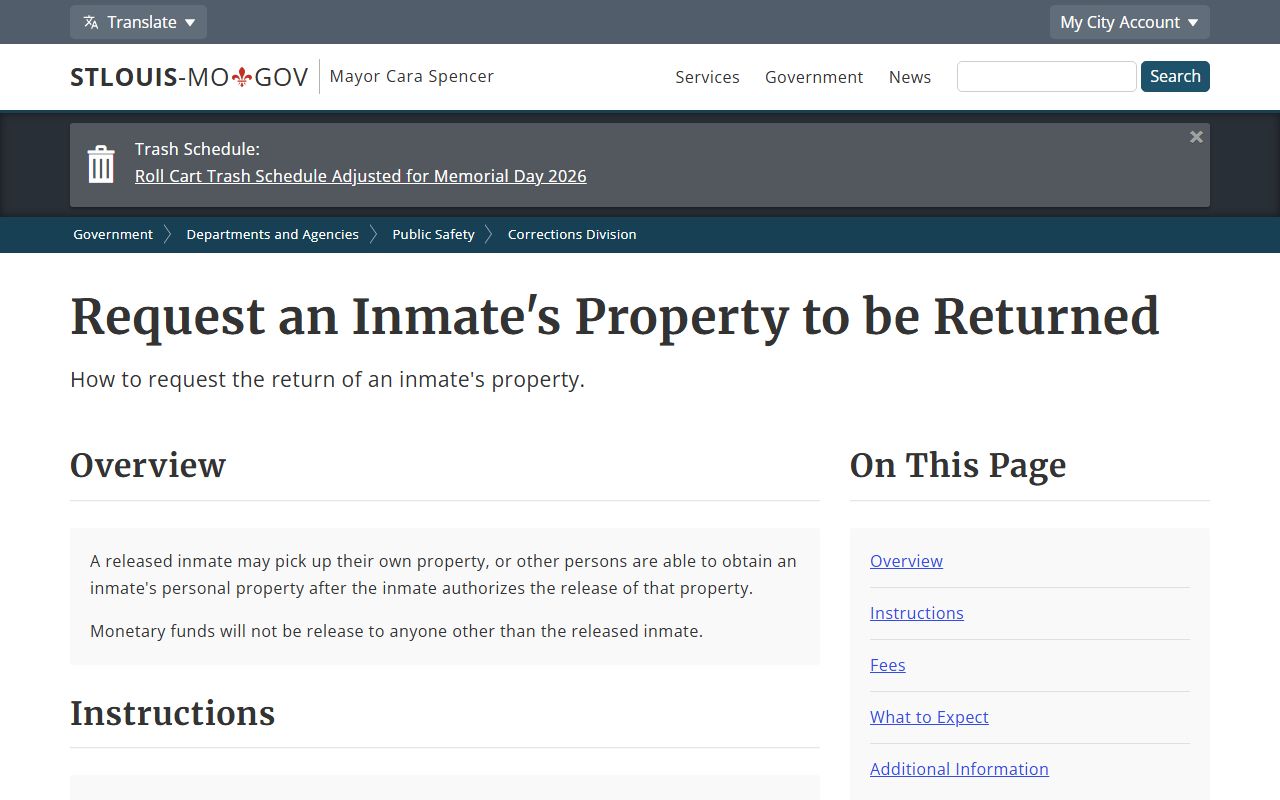
The page confirms that monetary funds go only to the released inmate, even after a property authorization.
Searching State and Federal Released Inmates
The city locator only covers city detention. People sent to state prison or held by the federal government appear in other databases. A St. Louis City released inmates search often jumps to the state or federal level once a case moves past the local jail. The table below lists the four main systems, what each one searches, and what it returns.
| System | Search Fields | What It Covers |
|---|---|---|
| Missouri DOC Offender Search | DOC ID or name fields | State prison, probation, parole, and active offender records; not the local jail roster. |
| BOP Inmate Locator | Find by number or by name; BOP Register, DCDC, FBI, or INS number; first, middle, last, race, sex, age | Federal custody, current or released federal prisoners since 1982. |
| Missouri Sex Offender Registry | Name, date of birth, address | Registered sex offenders; may show address, photo, offense, and compliance status. |
| VINELink / MOVANS | State selection; offender name or ID; notification registration fields | Custody status, location, and alerts; lists date of birth, age, status, and reporting agency. |
For state offenders, use the Missouri DOC offender search, which is free and covers prison, probation, and parole.
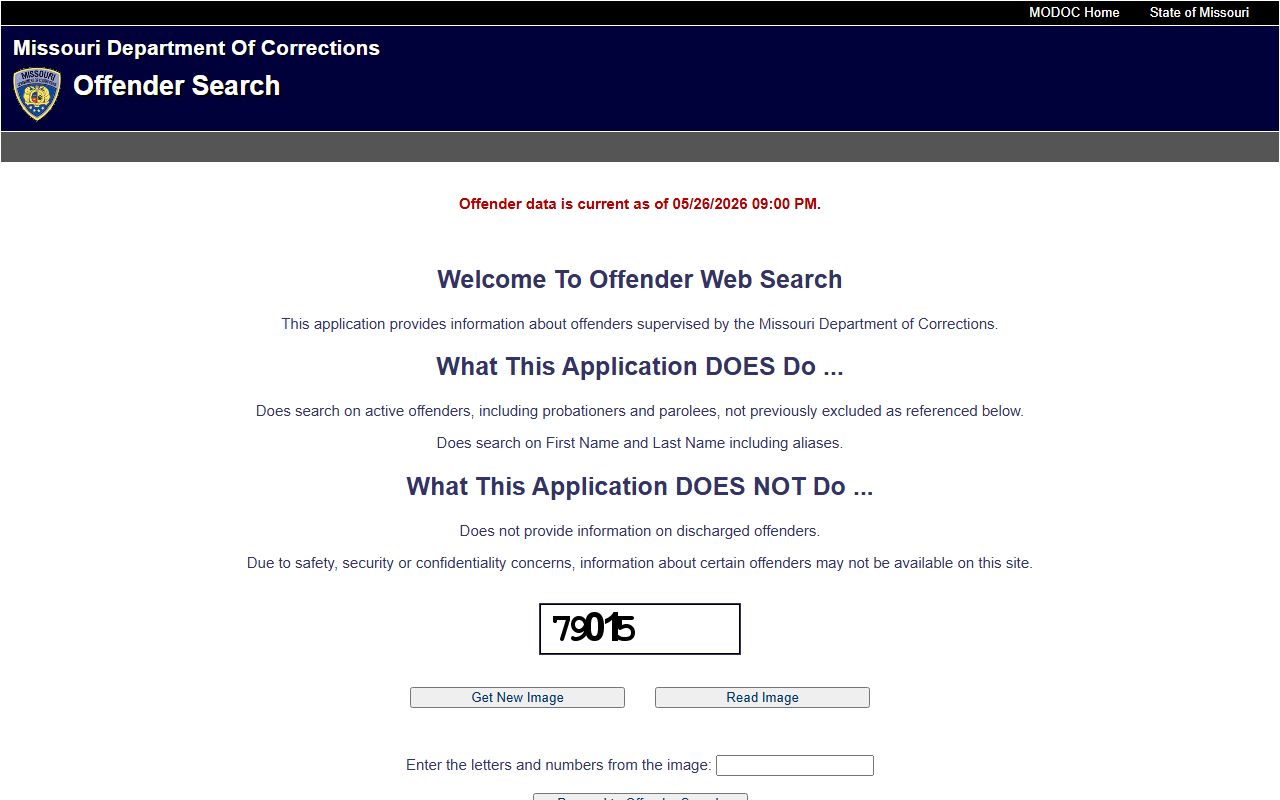
That search is the right tool when a person leaves city custody for a state sentence rather than the street.
For federal custody, use the Bureau of Prisons inmate locator, which finds people by name or by a federal number.
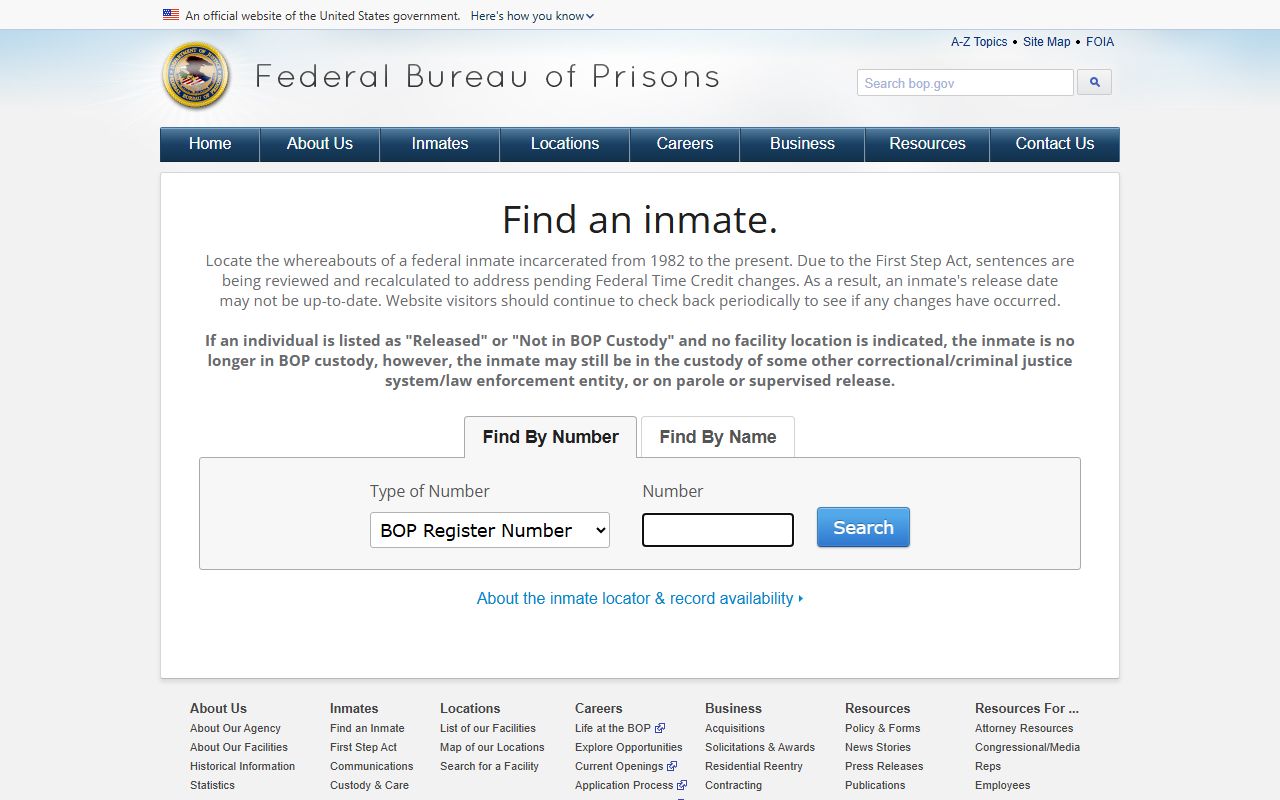
The BOP locator reaches back to 1982, so it can show federal releases as well as people in custody now.
St. Louis City Inmate Release Notifications
You do not have to keep checking by hand. VINELink, run through Missouri's MOVANS system, sends alerts when an offender's custody status changes. You register a phone number or email and pick the person to follow. The free service then notifies you about release, transfer, or other status changes.
The public MOVANS guide explains what a result shows. The fields below come from that official guide and help a victim or family member read the notification record.
| Field | What It Shows |
|---|---|
| Offender Name | The person being tracked. |
| Date of Birth | Used to confirm identity. |
| Age | Current age of the offender. |
| Custody Status | In custody, released, or other status. |
| Location or Reason | Where the person is held or why the status changed. |
| Reporting Agency | The agency that supplied the data. |
| Notification Options | Registration choices for alerts. |
Register at VINELink to start alerts for a St. Louis City inmate or a state offender.
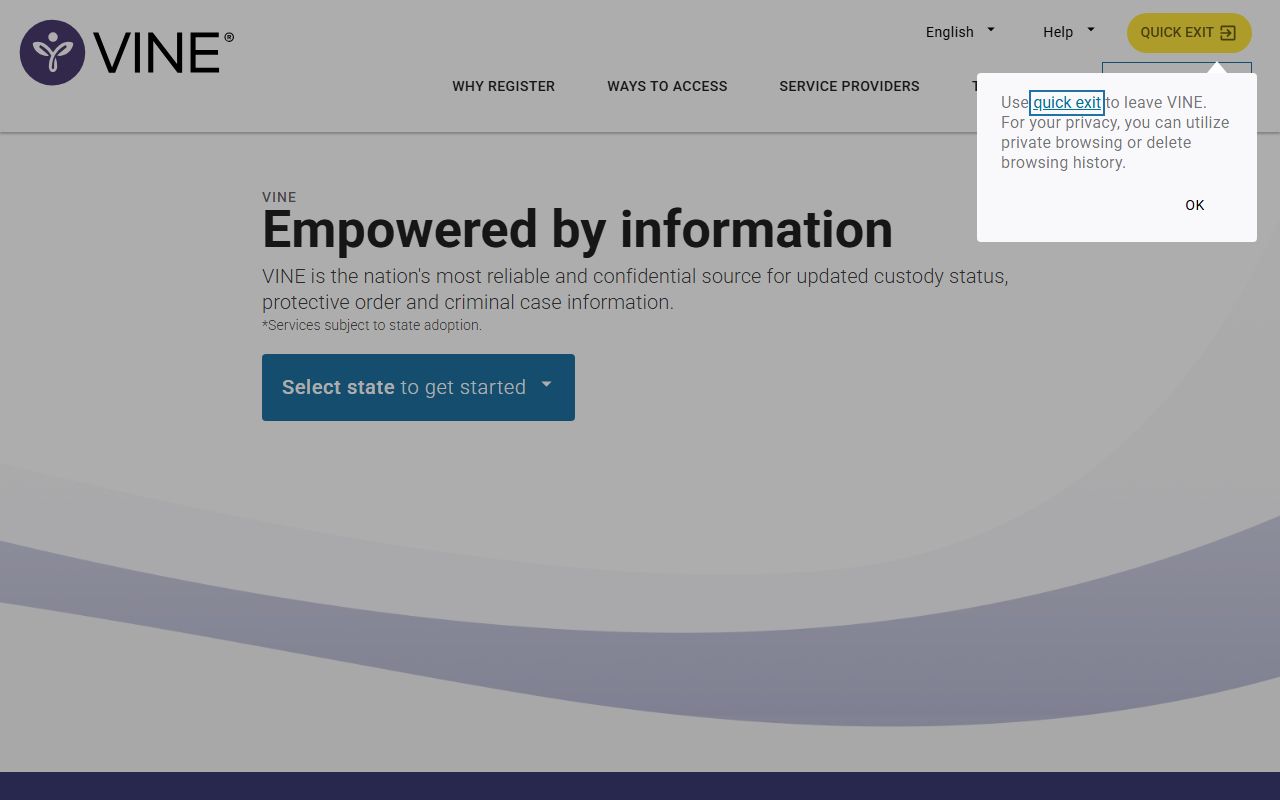
The notification system is built for victims and families who want to know the moment a custody status changes.
The Missouri Sex Offender Registry
Some released people stay in a public registry. The Missouri State Highway Patrol runs the sex offender registry, and it is open to the public. You can search by name, by date of birth, or by address. A result may show an address, a photo, the offense, and the person's compliance status.
The registry is separate from the jail roster and the court file. Use the Missouri sex offender registry search to check whether a released person is listed. The registry reflects ongoing reporting duties, not a one-time release event, so it stays current as offenders update their information.
Parole and Probation After Release
Release does not always mean a clean break from supervision. Many people leave custody on probation or parole, which carry rules and a supervising officer. State probation and parole status shows in the Missouri DOC offender search, since the department supervises those cases. Local pretrial release also exists for people awaiting trial rather than leaving a sentence.
St. Louis City Circuit Court Pretrial Services handles release options and connects people to services. The court runs a weekly Court Resource Day and supports the STL Tap-In Center, which links people with warrants, pretrial needs, or reentry barriers to providers. These local programs sit alongside state supervision and can be a first stop after a city release.
Parole and probation carry conditions. A person on supervision reports to an officer, follows rules set by the court or the parole board, and can be returned to custody for a violation. The state offender search shows the supervision status, so a name that left the city jail may still appear there as an active probationer or parolee. A violation can create a new warrant, which would then show on the St. Louis City warrant records page and could put the person back in the jail locator.
Reentry Resources in St. Louis City
A release is the start of reentry. Several groups in the city help with the barriers that follow a jail stay. They cover legal debt, housing, employment, and health. While in custody, the City Justice Center offers GED/HI-SET classes, career and life skills, substance-abuse programming, and occupational-therapy training to employment, which feed into a reentry plan.
The local services below help with the civil and practical side of leaving custody. Each one focuses on a different need, so the right fit depends on the person's situation.
- ArchCity Defenders - civil rights, municipal court debt, housing, and criminal-legal advocacy.
- Legal Services of Eastern Missouri - civil legal aid for housing, consumer, family, and public benefits issues.
- St. Patrick Center - housing, employment, behavioral health, and homelessness services.
- Mission: St. Louis - employment and community support programs.
- St. Louis Integrated Health Network - behavioral-health and reentry health connections.
The jail's own program list ties into these groups, and more detail sits on the St. Louis City inmate records page.
Civil Rights Restoration After Release
A conviction can suspend certain rights. In Missouri, a person convicted of a felony loses voting rights while imprisoned, on probation, or on parole. Those rights are restored after the sentence and supervision are complete. Voter registration can resume once supervision ends.
Other rights take more work to restore. Felony convictions, and some domestic violence orders or convictions, create state and federal firearm disabilities, and restoring firearm rights requires legal counsel. Driver license reinstatement runs through the Missouri Department of Revenue and is separate from the court record. Public benefits and housing eligibility depend on the benefit type, the conviction, and supervision status, so local legal aid is the best route for individual help. Some old cases may also qualify to be cleared, which is covered on the St. Louis City arrest records page.
Note: Rights restoration rules vary by case, so confirm voting, firearm, and benefit status with a Missouri attorney or legal aid group before acting.