
The St. Louis City Circuit Court
The Circuit Court is the trial court of general jurisdiction for the City of St. Louis. It is the 22nd Judicial Circuit, one of 46 circuits in Missouri. Because St. Louis is an independent city, the circuit lines up with the city alone, not a surrounding county. St. Louis County, just to the west, runs its own 21st Circuit out of Clayton. A St. Louis City Circuit Court case will not show up in a county search, so the right circuit matters.
The circuit hears civil suits, state felonies and misdemeanors, family cases, juvenile matters, and probate. It also holds a Municipal Division for city tickets and ordinance cases. The main building is the Clyde S. Cahill Courts Building at 10 North Tucker Boulevard downtown, which holds the Circuit Clerk, many courtrooms, and the Probate Division on the 10th floor. Public case information runs through Missouri Case.net under "City of St. Louis - 22nd Judicial Circuit."
St. Louis City Circuit Court Offices
The 22nd Circuit spreads across a compact downtown legal district. The Cahill building anchors it, but the prosecutor, the public defender, the municipal division, and the city jail each sit nearby. The table below lists the main courts and offices a person dealing with a St. Louis City court case may need.
| Court / Office | Address | Phone | Notes |
|---|---|---|---|
| 22nd Judicial Circuit Court | 10 N. Tucker Blvd., St. Louis, MO 63101 | 314-622-4500 | Main state trial court for the city. |
| Circuit Clerk | 10 N. Tucker Blvd., St. Louis, MO 63101 | 314-622-4044 / 314-622-4433 | Keeps court files and case records. |
| Probate Division | 10 N. Tucker Blvd., 10th floor, St. Louis, MO 63101 | 314-622-4238 | Estates, guardianship, conservatorship. |
| Municipal Court | 1520 Market St., Suite 1120, St. Louis, MO 63103 | 314-622-3231 | Traffic, ordinance, truancy, problem property. |
| Circuit Attorney | 1114 Market St., Room 401, St. Louis, MO 63101 | 314-622-4941 | Prosecutor for state criminal cases. |
| Public Defender, District 22 | 1114 Market St., Suite 602, St. Louis, MO 63101 | 314-340-7625 | Indigent defense for state cases. |
| City Justice Center | 200 S. Tucker Blvd., St. Louis, MO 63102 | 314-621-5848 | City detention facility, not a court. |
Judges and Divisions of the 22nd Circuit
The 22nd Circuit runs through about 30 numbered divisions. Each division has a judge or commissioner and a set caseload. The Presiding Judge is Christopher E. McGraugh, who sits in Division 1 and oversees court administration for the circuit. Below the presiding judge sit the circuit judges, the associate circuit judges, and the commissioners.
Circuit judges handle the heavier dockets: major civil suits, felonies, and family cases. Associate circuit judges, who sit in several of the numbered divisions, handle smaller civil matters, misdemeanors, and preliminary work. Commissioners hear specific dockets, with two assigned to the Probate Division and others to family and treatment-court work. The mix gives the circuit the range to cover everything from a small-claims dispute to a homicide trial.
The court lists each division and judge on the official 22nd Judicial Circuit website, which is the front door for division contacts, forms, and court services.
Circuit Court vs. Municipal vs. Associate Circuit
Three layers handle cases inside the 22nd Circuit, and they are easy to confuse. The Circuit Court proper hears the big cases. The Associate Circuit divisions handle smaller civil suits, misdemeanors, and early criminal steps. The Municipal Division hears city ordinance and traffic matters. All three sit within the same circuit, but they hear very different things.
| Circuit Court | Associate Circuit | Municipal Division | |
|---|---|---|---|
| Civil cases | Larger civil suits, family, probate | Smaller civil and small claims | None |
| Criminal cases | State felonies and misdemeanors | Misdemeanors, preliminary felony steps | City ordinance, minor criminal |
| Traffic | State traffic when joined to other cases | Some traffic | City traffic citations |
| Appeals go to | Missouri Court of Appeals, Eastern District | Circuit Court for trial de novo | Circuit Court for trial de novo |
The Municipal Division is a division of the 22nd Circuit, not a separate court. Its official Municipal Court page says it does not hear civil cases, divorces, evictions, orders of protection, jury trials, state misdemeanors, or felonies. Those go to the Circuit Court. The traffic court records page covers municipal citations in depth.
How a Case Moves Through the System
A St. Louis City court case can start low and climb. A city ticket starts in the Municipal Division. A state crime or a civil suit starts in the Circuit Court. From the trial level, a losing party can appeal upward. The path runs through the state's intermediate appellate court and, in some cases, to the top.
Case flow: Municipal Division › Circuit Court (22nd Judicial Circuit) › Missouri Court of Appeals, Eastern District › Supreme Court of Missouri
St. Louis City appeals go to the Eastern District of the Missouri Court of Appeals, unless a case takes a direct route to the Supreme Court of Missouri by constitutional or statutory rule. A municipal or associate matter can also get a "trial de novo," a fresh trial in the Circuit Court, rather than a true appeal. The Supreme Court sits at the top and writes the rules that govern public access to court records across the state.
The Probate Division
The Probate Division of the 22nd Circuit sits on the 10th floor of the Cahill Courts Building. It administers the estates of people who have died and oversees guardianship and conservatorship for minors and adults found disabled or incapacitated. Probate Commissioners Jill M. Hanley and Kevin B. Anderson hear these matters. When someone cannot handle their own affairs, the division can appoint a guardian for care or a conservator for money after a proper hearing.
Probate also keeps a long historical trail. The division maintains a Historical Probate Case Index covering decedent estates filed from 1890 and guardianships back to 1815. The probate records page covers the index, contacts, and request steps in full.
Specialty and Treatment Courts
The 22nd Circuit runs treatment courts that pair supervision with care. The goal is to break the cycle of addiction, crime, and jail. The circuit lists an Adult Treatment Court, a Veterans Court, and a Family Treatment Court. Participants get treatment, frequent drug and alcohol testing, case manager and probation meetings, and regular court dates before a commissioner.
Adult Treatment Court works with people whose crimes tie back to drug addiction, aiming for court-monitored treatment over plain punishment. Veterans Court diverts military veterans who face mental health or substance issues from the usual criminal process. The official treatment court page describes each docket. These dockets feed treatment-court records into the broader St. Louis City court records system.
Accessibility and Court Services
All three 22nd Circuit court buildings have elevators. The court must appoint a qualified interpreter for a court proceeding when a non-English-speaking person is a party or a witness, unless that right is waived. The ADA coordinator handles access requests and grievances for the circuit. Everyone who enters a court building passes through a metal detector, and bags are screened at the door.
The court posts these rules on its accessibility and interpreters page.
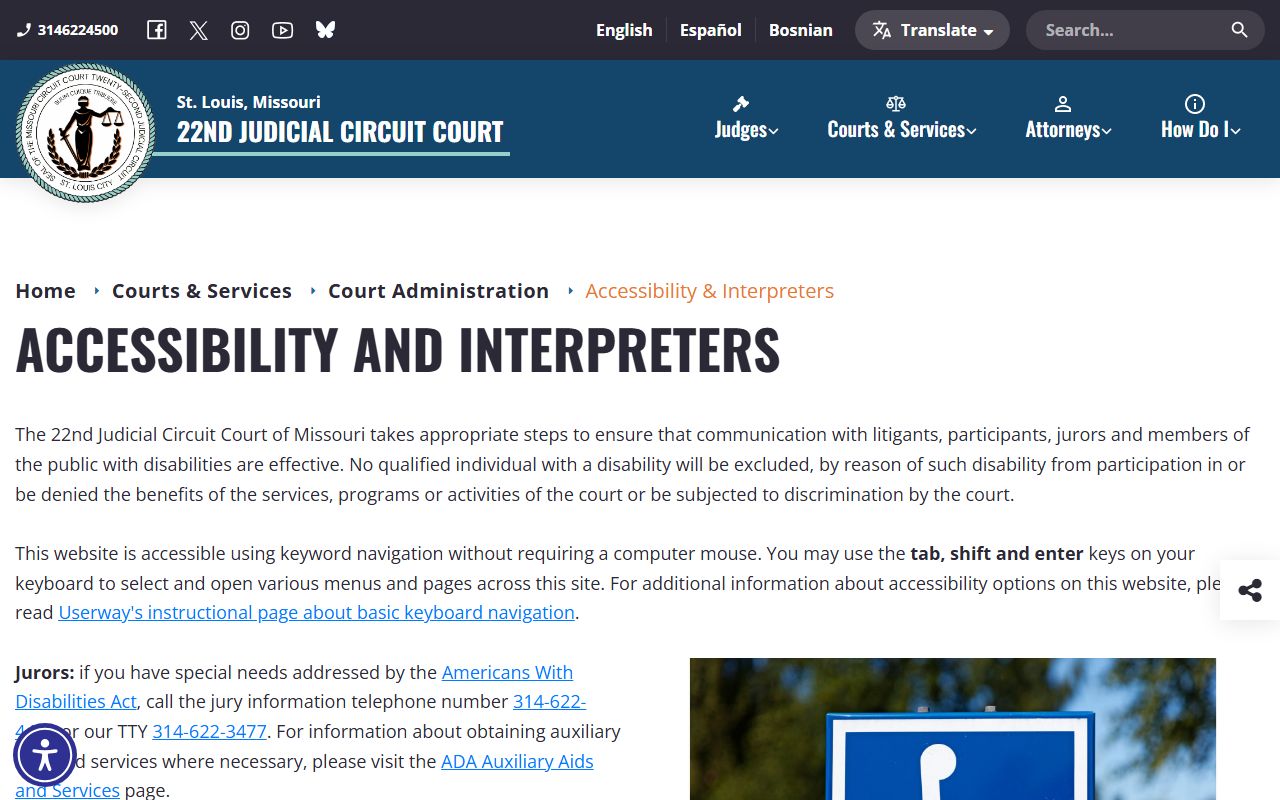
The page names the ADA coordinator and explains how to ask for an interpreter or file a grievance, which matters for anyone visiting in person to handle St. Louis City court records.
The Sheriff and Courthouse Security
The St. Louis Sheriff's Office is separate from the city jail and from the police. Its main job ties to the courts. The Sheriff provides security for the Circuit Court, moves prisoners between the courts and detention, serves court papers and eviction notices, and issues jury summons and gun permits. So the deputies a person sees inside a courtroom are sheriff staff, not corrections officers.
The office posts its duties on the St. Louis Sheriff page.
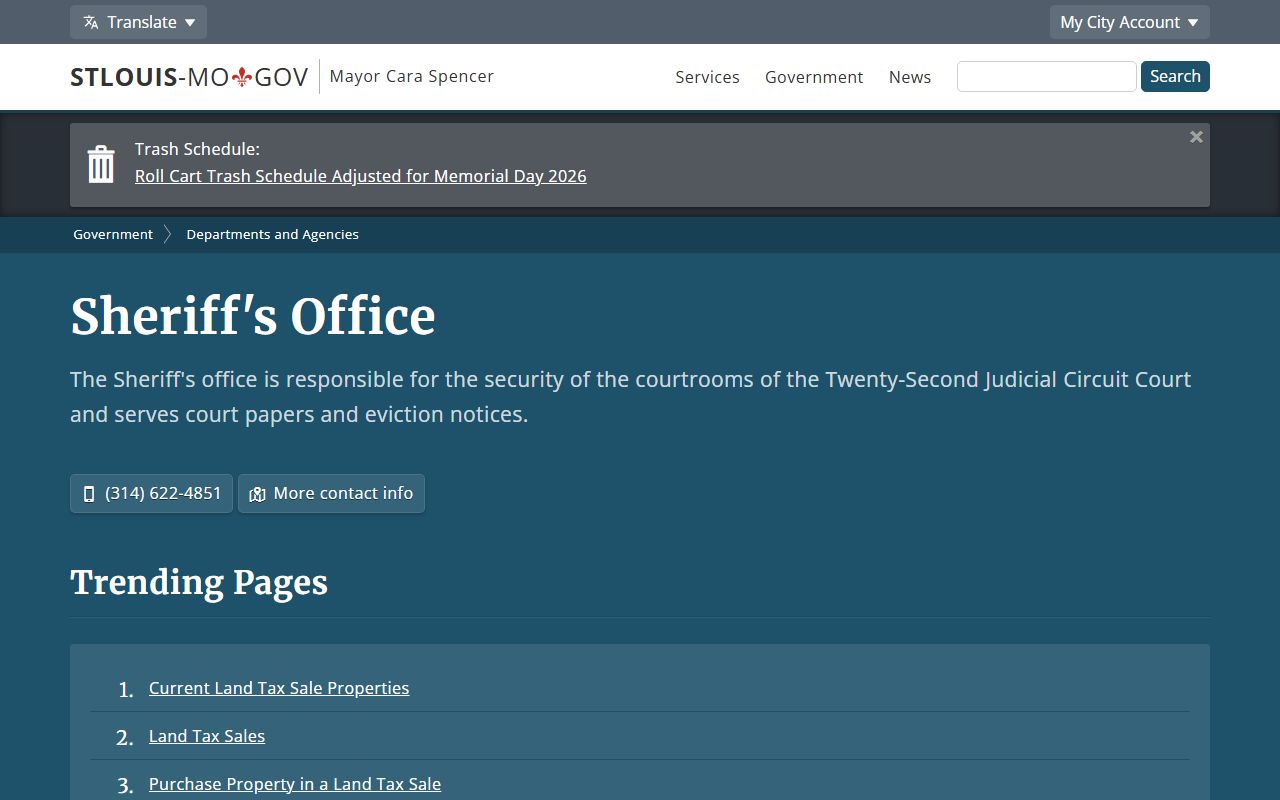
The Sheriff's role in service of process is why a court paper in a St. Louis City case often comes with a sheriff service fee, billed per defendant served.
The office also keeps a long line of sheriffs on record. The history of the Sheriff's Department traces that list.
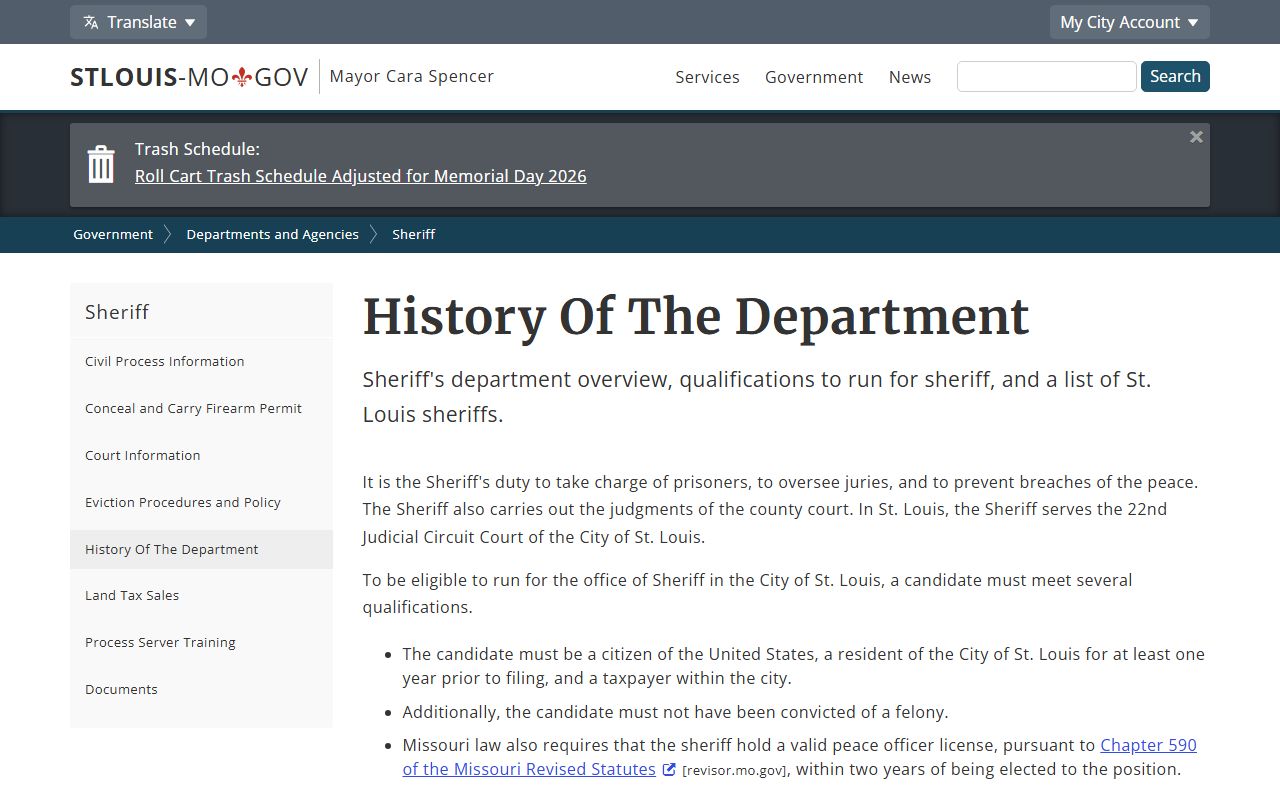
The history page shows how the office has served the circuit over time, well before today's electronic court records.
Federal Court Is Not the Circuit Court
State and federal courts are different systems. A St. Louis City Circuit Court case is a state matter. Federal cases for the area go to the U.S. District Court for the Eastern District of Missouri, at the Thomas F. Eagleton U.S. Courthouse, 111 South 10th Street. Federal matters include federal crimes, civil rights claims, and federal-question civil suits. None of these appear in Missouri Case.net.
Bankruptcy is its own federal track. The U.S. Bankruptcy Court for the Eastern District of Missouri handles those cases. Use PACER, the federal court records portal, for district, bankruptcy, and appellate dockets. The U.S. Bankruptcy Court for the Eastern District of Missouri posts its own filing and contact information.
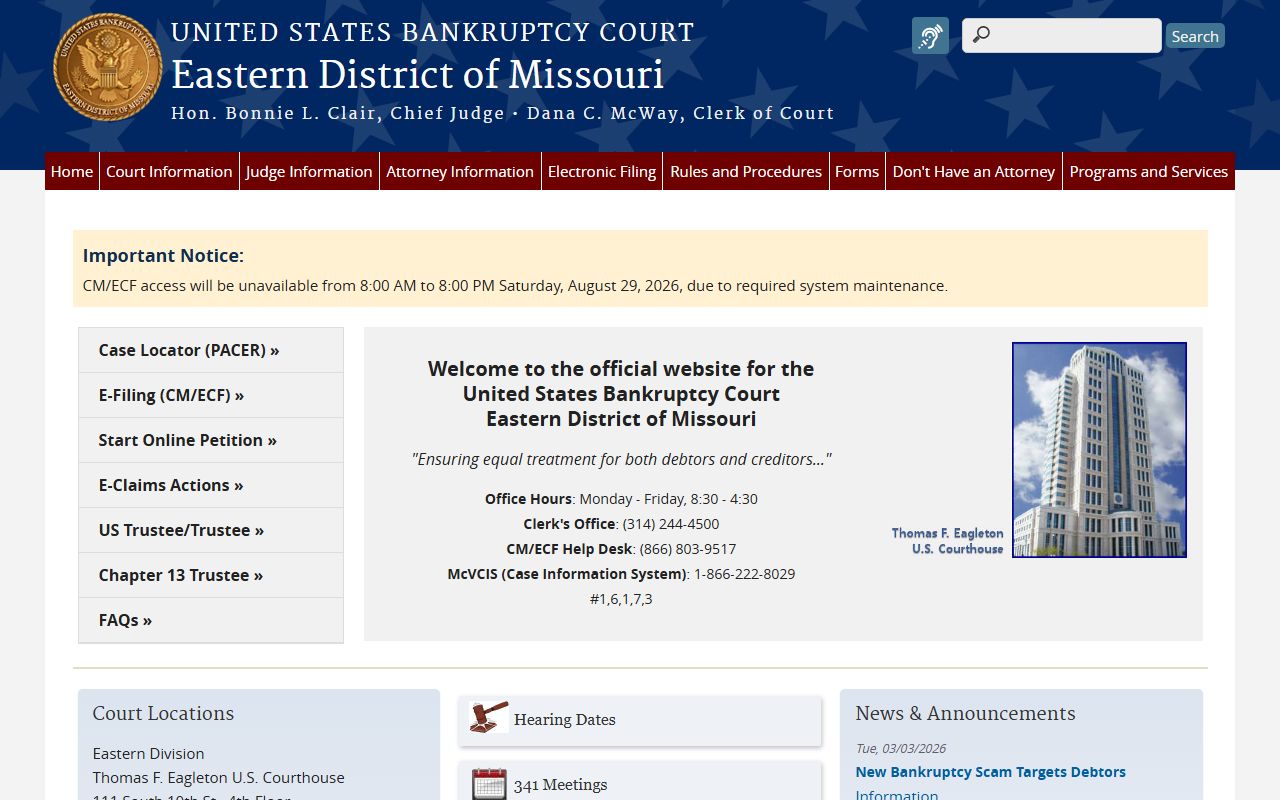
Bankruptcy records sit in that court's system, not in the 22nd Circuit's St. Louis City court records.
On the prosecution side, the U.S. Attorney's Office for the Eastern District of Missouri handles federal cases, separate from the city's Circuit Attorney.
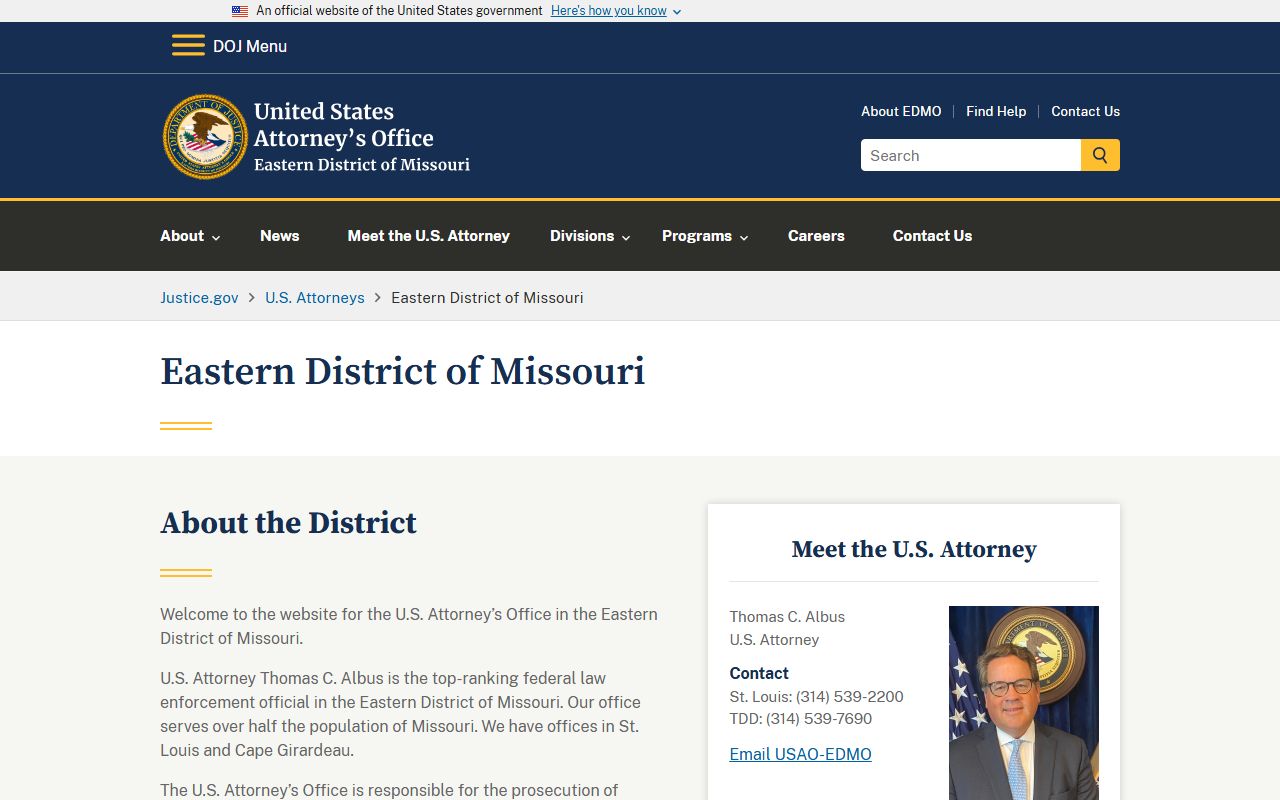
That office prosecutes federal crimes and serves 49 counties, which is why a federal charge does not run through the St. Louis City Circuit Court.