
Two Laws Govern St. Louis City Public Records
Access splits along a clear line. The Missouri Sunshine Law, Chapter 610 of the Revised Statutes, opens records held by public governmental bodies. That covers city offices like the Recorder, the Sheriff, the Police Department, and the Corrections Division. Court records take a different path. They fall mostly under Missouri Court Operating Rule 2, which the Supreme Court of Missouri writes. The Sunshine Law and the court rule do not always overlap, so the right request depends on the office.
Why does this matter for a St. Louis City public records search? Because a court docket and a city personnel file follow different rules, even when they sit blocks apart. A request for a police arrest report is a Sunshine Law request. A request for a court case file is a court-records request. The St. Louis City court records page covers the court side, and the rest of this page covers the city-agency side.
Missouri states a strong policy in favor of openness. The law declares that the records, meetings, votes, and actions of public bodies are open unless the law says otherwise. You can read the policy at RSMo § 610.011.
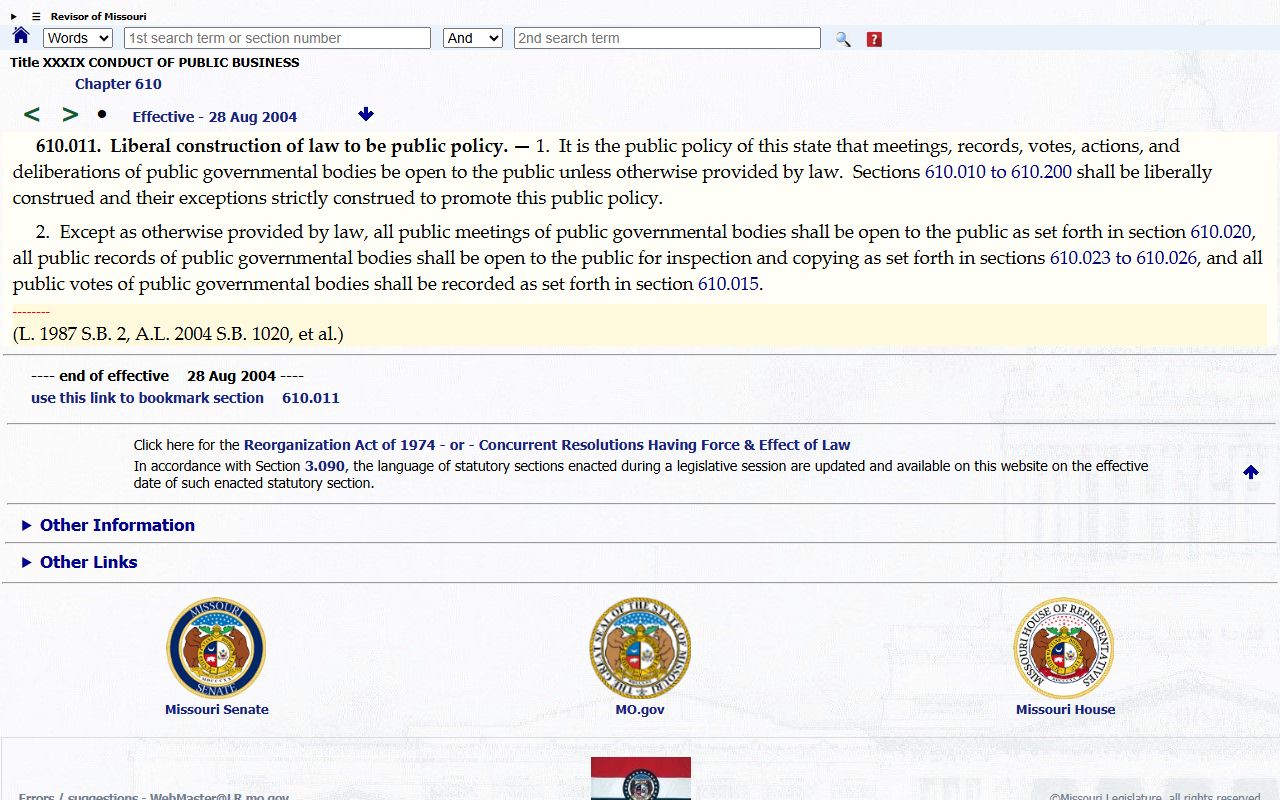
That open-records policy supports requests for city files, but it does not override the court rules that keep some judicial records closed.
The Missouri Sunshine Law and St. Louis City
The Sunshine Law is Chapter 610. It is the main framework for open government records in Missouri. It sets out which bodies are covered, how a person asks for records, what can be closed, and what copies cost. The law applies to St. Louis City executive offices and departments. Because St. Louis is an independent city, those offices carry county-level duties too, so the Sunshine Law reaches a wide set of city files.
The chapter holds many sections. Reading the full chapter shows how the parts fit together, from definitions through fees and closed records. You can view the full Sunshine Law chapter in one place.
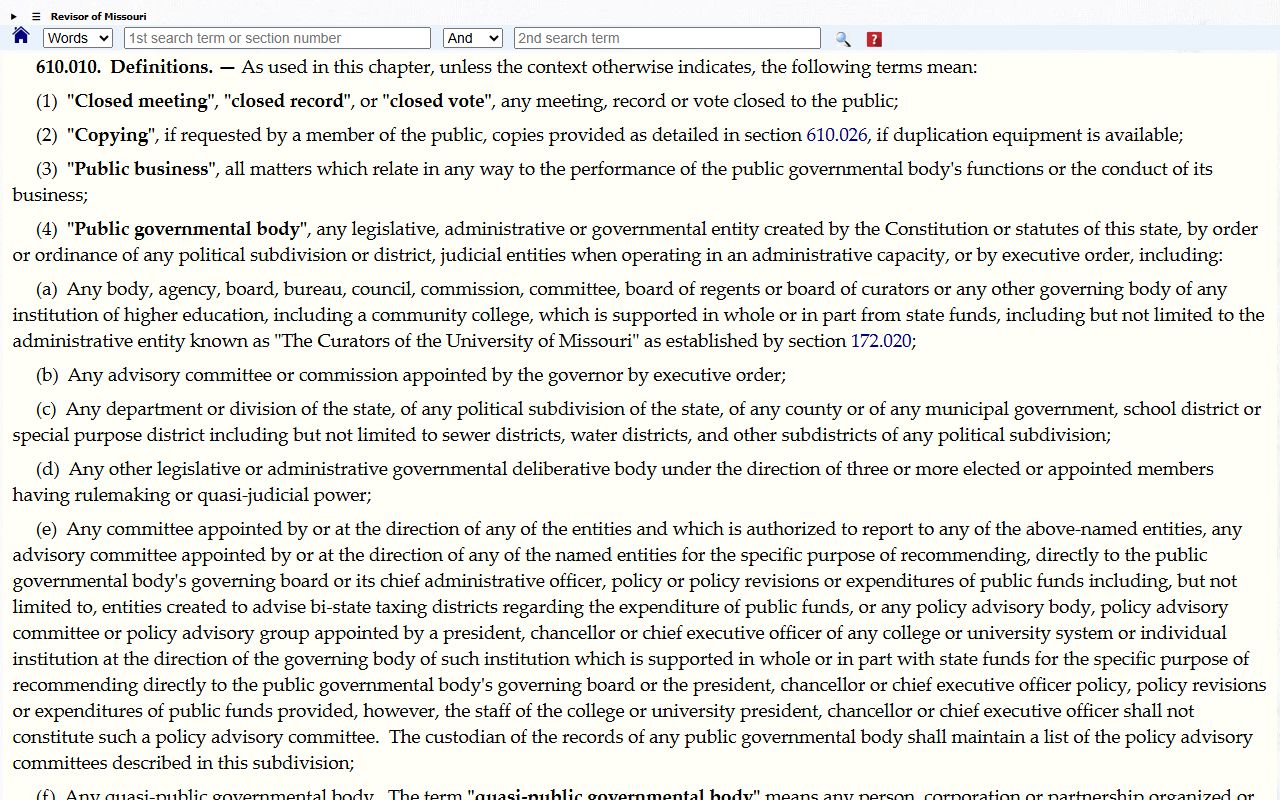
The chapter view lists every section in order, which helps when you need to cite the right rule in a St. Louis City public records request.
The law starts with definitions. They decide whether a given office is a public governmental body and whether a file is a public record. Those terms frame every request. The definitions sit in RSMo § 610.010.
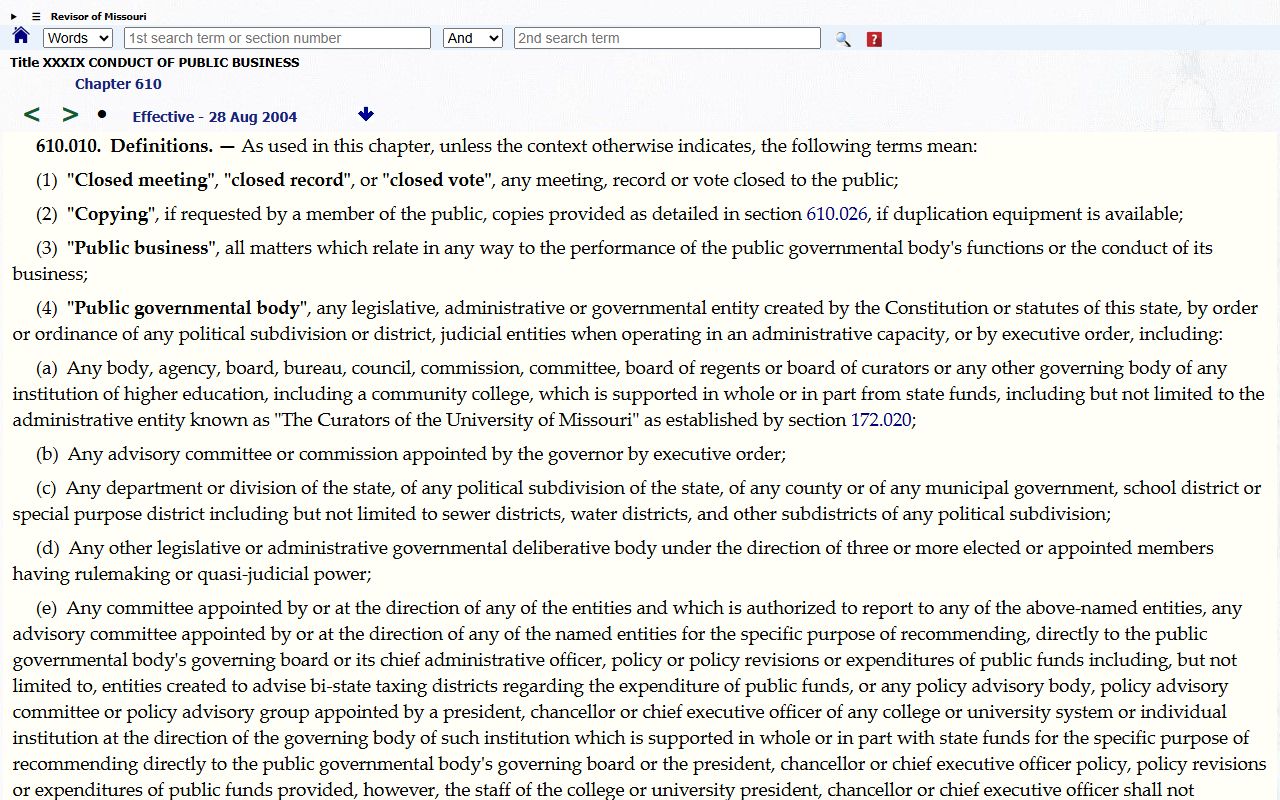
These definitions matter for city offices such as the Recorder, the Sheriff, and the Corrections Division, while judicial records are governed by court rules instead.
What St. Louis City Offices Hold
The courts are only one source of public records. Several city offices hold records that people request often. Because St. Louis is its own city and county, these offices do a lot of work. Knowing who holds what saves a misdirected request.
Here are the main non-court holders of St. Louis City public records.
- Recorder of Deeds - land records, deeds, and marriage records and licenses.
- Sheriff - court security, civil process, evictions, and gun permits.
- Division of Corrections - jail records and inmate information for the City Justice Center.
- Police Department - arrest reports and incident reports, subject to limits.
- City departments - administrative files, contracts, and public meeting records.
Marriage and deed records go through the Recorder of Deeds, while arrest and incident reports tie back to the arrest records page.
The independent-city status drives this list. St. Louis split from St. Louis County in 1876, so the city runs functions that a county government handles elsewhere. The Recorder's Marriage Department, the jail, and land recording are all city operations here. That is why a St. Louis City public records request rarely needs to leave the city. The office you want is almost always a city department, not a county seat in Clayton.
How to File a Public Records Request
The Sunshine Law gives a clear process. Every public governmental body must name a custodian of records and make open records available. You direct your request to that custodian. The law lets you ask in writing, which also gives you a record of the request and the date. The custodian rule sits in RSMo § 610.023.
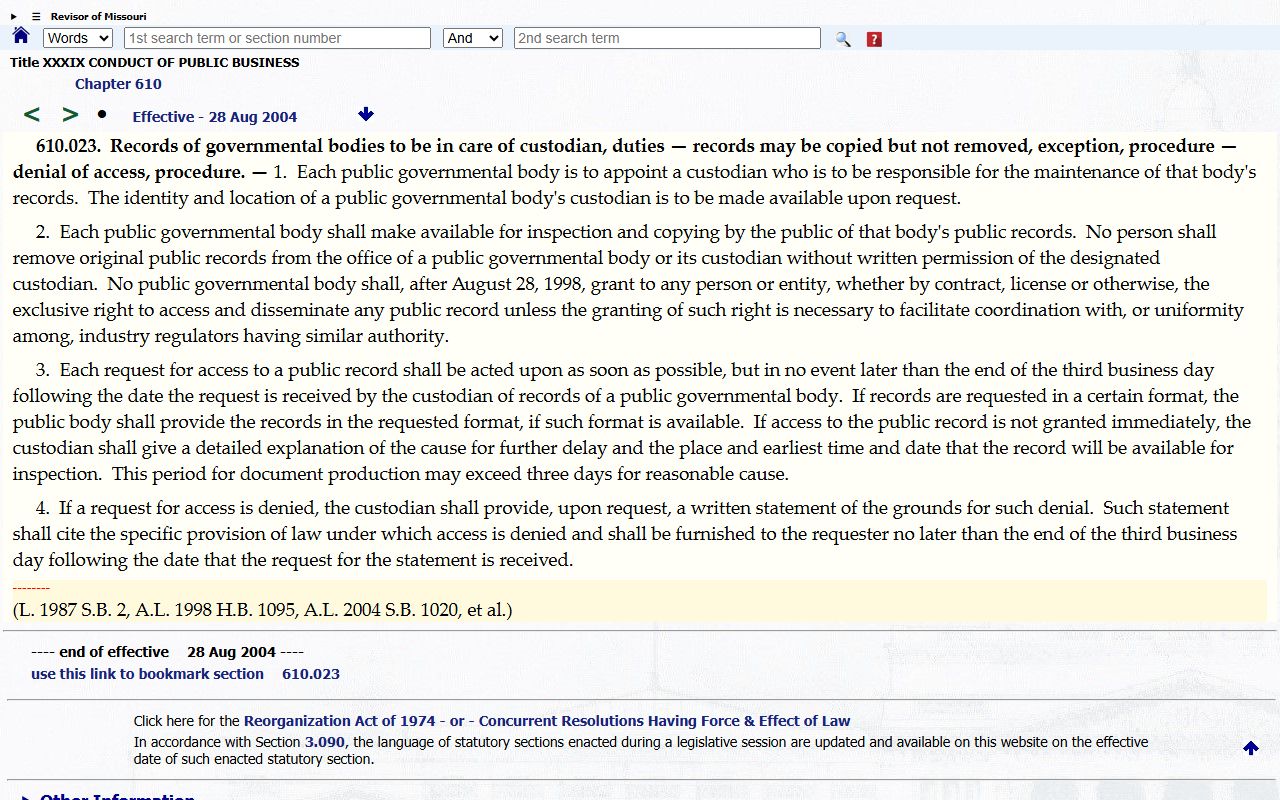
That section requires each city body to appoint a custodian and respond to a request under the Sunshine Law's procedure. The steps below put the process in order.
- Find the right city office or department that holds the record you want.
- Identify the custodian of records for that body.
- Put the request in writing and describe the records as clearly as you can.
- State your name and a way to reach you for follow-up.
- Ask how the body wants payment for copies and any research time.
- Send the request to the custodian and keep a dated copy.
- Wait for the response and pay any fees before you receive the records.
A clear, narrow request moves faster than a broad one. If part of the file is closed, the body should still release the open parts and tell you which rule it relied on to withhold the rest.
Fees for St. Louis City Public Records
Open records are not always free. The Sunshine Law lets a public body charge for copies, for staff time spent on research, and for related costs. These fees are set by statute, not by the court fee order. They are also separate from court filing fees and from certified court copy fees. The fee rule sits in RSMo § 610.026.
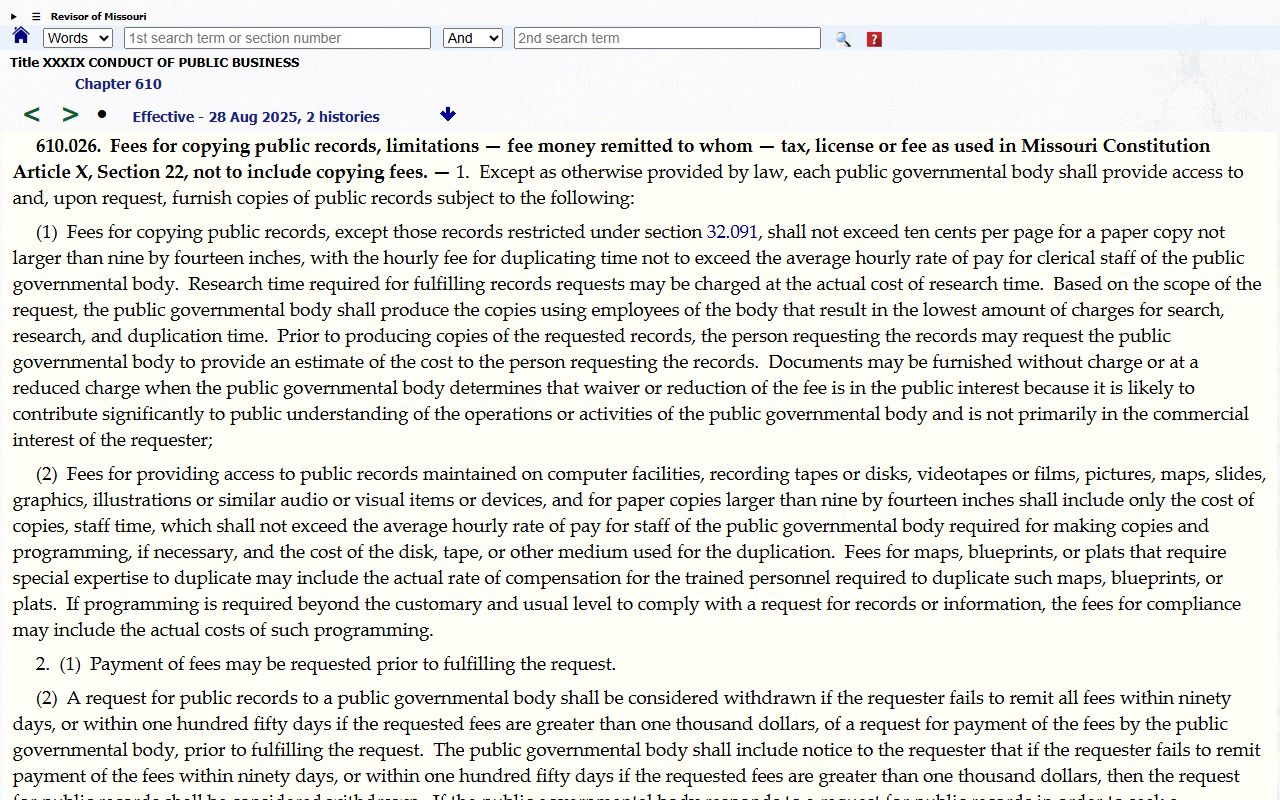
The section governs charges for copies and for the time staff spend pulling and reviewing records. A few points help when you budget a request.
- Copy fees should track the actual cost of making the copies.
- Research time can be charged at the rate of the lowest-paid staff able to do the work.
- Ask for a fee estimate before a large request so there are no surprises.
Court records carry their own copy costs, which the Circuit Clerk sets, so do not assume the Sunshine Law fee rule applies to a court file.
Arrest and Incident Reports
Arrest records draw a lot of requests. Missouri treats them under a specific section, not the general open-records rule. Basic arrest information can be open while an active investigation stays closed. So a police or sheriff agency may release the fact of an arrest and hold back the investigative file. The line between the two is set by statute.
The rule for arrest and incident reports is RSMo § 610.100. It explains what arrest data is open and why some investigative records can be withheld. For the full picture on finding arrests and booking data, see the St. Louis City arrest records page. Warrant data ties in too, and the warrant records page covers active warrants and bond.
Records That Stay Closed
Not every record opens on request. The Sunshine Law lists categories a body may close. Those include legal actions, real estate deals, personnel files, sealed bids, security plans, and records protected by other laws. So even when a court docket is public, a related city file may not be. The closed-record categories sit in RSMo § 610.021.
Court records add another layer. Juvenile, adoption, sealed, and expunged matters are restricted by their own statutes and rules. Mental health and civil detention files hold sensitive medical data and stay closed. Protection-order files can hide a victim's address and safety details. The court records page covers the judicial-side restrictions in full.
Expungement is a special case. When a court orders a criminal record expunged, the agencies named in the order close the covered records. That means the same record that was once open in a public search becomes closed by law. So a clean request still cannot pull an expunged file. The court rules and the Sunshine Law both bow to the expungement order. Personal identifiers add one more limit. Social Security numbers, financial account numbers, and protected victim data are redacted before release, even when the broader file is open.
Note: When a body withholds part of a file, it should release the open portions and name the statute it relied on to close the rest.
Key St. Louis City Public Records Statutes
A handful of Chapter 610 sections do most of the work in a public records request. They run from the open-records policy through the fee rule. Keeping the section numbers handy helps you point a custodian to the right rule. The callout below gathers the main ones.
Key Statutes:
RSMo § 610.010 - Defines public governmental body and public record under the Sunshine Law.
RSMo § 610.011 - Sets the open-records policy that records are open unless the law says otherwise.
RSMo § 610.021 - Lists the categories a public body may close.
RSMo § 610.023 - Requires a custodian and sets the request procedure.
RSMo § 610.026 - Governs fees for copies and research time.
Used together, these sections cover most St. Louis City public records questions, from how to ask to what a body can withhold.